About Motor-Driven 3-Way Deviating Valves Series VPR
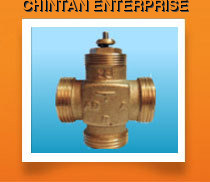
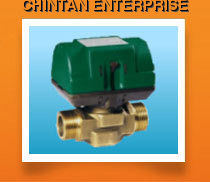
Motor-Driven 3-Way Deviating and Mixing PN16 Shutter Valves Series VPR
| PRINCIPAL CHARACTERISTICS AND APPLICATIONS : The VPR series of 3-way shutter valves may be used as deviating or mixing valves (water, water + max.30% glycol) in heating, conditioning and ventilating systems. They may be motor-driven with MUT motors series V3, on-off and modulating. The VPR valve is available in two versions:- N.O. (normally open): if the system of the valve is not pressed, the direct passage (AB-A) is open and the by - pass (AB-b) is closed. - N.C. (normally close): if the stem of the valve is not pressed, the direct passage (AB-B) is open and the by-pass (AB-A) is closed. |
| VPR valves present : High Kvs valves. |
| Possibility of precise modulation thanks to the long travel and shape of the shutter, which allows both the direct passage and the by-pass to be opened immediately, guaranteeing a modulation of the flows in a field equal to the whole travel. Very low leakage, even if used in system with a high differential pressure. The valves are particularly suitable for use in regulating temperature in underfloor heating systems. |
Precision Flow Diversion and MixingThe Series VPR 3-way valves are engineered to efficiently reroute or blend process media, featuring a synchronous electric actuator for precise on/off or modulating control. Their compact, universal design supports installation in both horizontal and vertical positions, making them adaptable to confined spaces or complex system layouts.
Robust Construction for Demanding ApplicationsBuilt with options for brass or stainless steel bodies, and equipped with durable EPDM or PTFE seals, these valves operate reliably in water, steam, oil, air, and various neutral fluids or gases up to 16 bar. The actuator protection class of IP54 or IP65 ensures resistance to dust and water ingress, critical for industrial and HVAC environments.
Versatile Connectivity and CertificationChoose from BSP/NPT threaded or PN16 flanged end connections to match your piping infrastructure. All models comply with ISO 9001 quality management standards, and certain variants are CE certified for international acceptance. Voltage supply options (230V AC or 24V AC) allow integration into new or existing systems.
FAQs of Motor-Driven 3-Way Deviating Valves Series VPR:
Q: How do you install the Series VPR 3-way deviating valves in industrial settings?
A: These valves feature a universal mounting system, supporting both horizontal and vertical orientation. Installation is straightforward, with options for BSP/NPT threaded or PN16 flanged end connections, accommodating various pipeline standards. Ensure appropriate actuator protection (IP54 or IP65) based on environmental conditions.
Q: What benefits does the synchronous electric actuator provide for these 3-way valves?
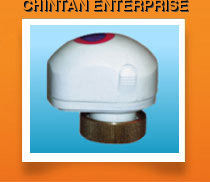
A: The synchronous electric actuator allows for precise, reliable switching with low power consumption and manual override capability. This ensures dependable modulation or on/off flow control, with cycle times between 1560 seconds depending on valve size and model.
Q: When should you choose EPDM or PTFE seals for these valves?
A: EPDM seals are recommended for applications involving water and some neutral liquids, while PTFE seals are preferable for higher chemical resistance or higher temperature media such as steam. Selection depends on the specific process requirements and media compatibility.
Q: Where can these valves be used effectively?
A: These valves are suitable for applications in industrial automation, HVAC systems, water treatment facilities, and general process control environments across India and globally. Their robust construction and universal mounting make them ideal for diverse plant designs.
Q: What is the process for integrating the electric actuator with control systems?
A: The actuator can be wired to on/off or modulating control systems at either 230V AC or 24V AC, depending on the model. Integration usually involves connecting the actuator to the system controller (such as a PLC or BMS) following supplied wiring diagrams and safety protocols.
Q: What makes the VPR Series an advantageous choice for system operators?
A: The VPR Series combines compact form, high reliability, flexible connections, and low energy consumption with industry-standard compliance. Operators benefit from efficient installation, minimal maintenance, and adaptability to a range of applications and environmental conditions.






 Send Inquiry


 Send Inquiry
