About Electrothermal Servo Controls for Shutter Valves
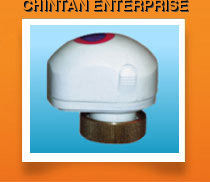
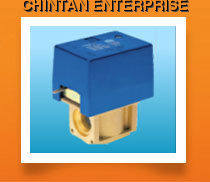
Electrothermal Servo Controls for Shutter Valves Series V3EC
|
| MAIN CHARACTERISTICS : V3EC servocontrols have been designed for use on domestic heating and cooling systems, where compact dimensions and ease of assembly are required. The closing force of the valve stem is guaranteed by a spring couple to a wax expansion element. To motorise the manually controlled shutter valves, predisposed to be controlled by these servocontrols it is sufficient to unscrew the manual knob completely and screw the ring nut of the actuator for the quick coupling to the servocontrol. All this is done without having to drain the system (see table 3 for the valves predisposed for these servocontrols). |
| Model : |
| V3EC/60/230/00 |
| | Operating mode |
| two points (on-off) | | Shaft position when not fed |
| normally closed | | Voltage |
| 24V AC 230V AC | | Frequency |
| 5060 Hz | | Peak Current |
| 150mA | | Power absorbed at steady operating speed |
| 3.5W - 3W | | Cable length |
| approx. 1000mm | | Minimum travel/ Maximum travel |
| 6mm/8mm | | Shutter shaft ascent travel time |
| minimum 300s | | Shutter shaft descent travel time |
| minimum 300s | | Force exerted by the shutter shaft During descent travel |
| 90N 15% | | Degree of protection EN 60529 |
| IP 40 | | Minimum and maximum environment temperature |
| 60C | | Overall dimensions |
| 57mm 52mm 47mm | | Casing material |
| PA self-extinguishing VO | | Auxiliary microswitch |
| 5A125VAC-3A250VAC | | Valve connection |
| Threaded ring nut M30 1.5 |
|
| Distance between the valve body rabbet and of the shutter shaft in low position = A 11 |
| Distance between the valve body rabbet and of the shutter shaft in high position= A 17, 5 |
| INSTALLATION Remote the handwheel or the cap from the valve body. Install the actuator, exerting light pressure, and screw the knurled ring nut of the actuator onto the valve body. Do not use spanners, box wrenches or similar tools. Make the electrical connection. Important notes for maintenance. The power cable must never be replaced. Opening the actuators will cause irreparable damage to the device. Faulty actuators must be completely replaced. Warnings. The actuator must NOT be installed below the valve body. |
Robust Electrothermal Servo SystemOur shutter valve actuators employ an advanced electrothermal servo system, ensuring rapid and precise valve movement for effective liquid and gas regulation. With a durable enclosure rated IP54, the system functions reliably in demanding industrial settings, providing longevity and resistance to dust and splashes. Whether installed horizontally or vertically, these controls adapt to various application needs, delivering over 50,000 operating cycles.
Versatile Application and Comprehensive CompatibilityEngineered for seamless integration in industrial automation, HVAC, and liquid flow management, our servo controls accommodate diverse media like water, oil, and gas. With valve sizes ranging from 1 inch to 8 inch and connection options of threaded or flanged, they offer exceptional flexibility. High-quality sealing with EPDM and PTFE guarantees compatibility and enhanced leakage prevention under pressures up to 1.6MPa.
FAQs of Electrothermal Servo Controls for Shutter Valves :
Q: How do electrothermal servo controls benefit industrial automation and HVAC systems?
A: Electrothermal servo controls offer precise, automated management of fluid flow, ensuring efficient process control, energy savings, and improved system reliability in industrial automation, HVAC, and liquid flow applications.
Q: What installation options are available for these shutter valve actuators?
A: These actuators are designed for flexible mounting in both horizontal and vertical positions, making them suitable for a variety of piping systems and installation scenarios.
Q: When should I choose an actuator with an IP54 rating and Class F insulation?
A: Choose an IP54-rated, Class F insulated actuator when your application demands protection against dust and water splashes and operates in environments with higher temperatures or electrical loads, ensuring both safety and performance longevity.
Q: Where can these electrothermal servo controls be applied?
A: They are widely used in industrial automation plants, HVAC systems, and any fluid management scenarios involving water, oil, or gas, especially where reliable control and compatibility with threaded or flanged connections are required.
Q: What is the process for integrating these servo actuators into existing systems?
A: Integration involves selecting the correct valve size (1" to 8"), ensuring compatibility with DN25 to DN200 ports, connecting via cable gland interface, and wiring to a 220 V AC or 24 V DC supply, followed by system configuration for automated flow control.
Q: How long is the mechanical life of the actuator, and what materials ensure durability?
A: The actuator is rated for over 50,000 mechanical operating cycles. Durable materials such as stainless steel, brass for the disc and valve body, and ABS for the housing contribute to its longevity, even in demanding industrial environments.
Q: What are the sealing and pressure capabilities of these servo controls?
A: These actuators utilize EPDM and PTFE seals, designed to withstand operating pressures up to 1.6 MPa, providing robust leak protection for water, oil, and gas media.






 Send Inquiry


 Send Inquiry
