About Magnesium Anode Rod
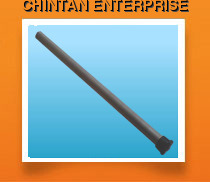
Leveraging on our industrial experience, we are able to supply and export Magnesium Anode Rod. Made of superior quality raw materials, these products are attained from authentic sellers of the market. Our clients applaud these products for their effective functioning. These products are used in solar water heaters, boilers, steel water containers in order to increase efficiency and correct results. Magnesium Anode Rod is packed in special damage free packaging material so as to determine its secure transportation.
Other details:
| MITT Magnesium Anode Rod |
Magnesium anode rods are the most common type of anode rod. The magnesium anode rod protects the tank by corroding in place of the steel. Because the rod is designed to corrode, it will eventually wear away. It ideally used for water heaters, boilers and stainless steel containers where corrosion is common.
The first property to consider is their electrical potential. All metals generate a negative voltage when immersed in water.
The three most active metals used for sacrificial anodes are Zinc, Aluminum and Magnesium. The more negative the voltage, the more active the metal is considered, and magnesium generates negative 1.6 Volts compared to Zinc and Aluminum which generates negative 1.05 volts and 1.1 volts respectively. Hence, magnesium is highly preferred to give water heaters, solar heaters, boilers etc., a longer life. |
| How anode works: |
| When two metals are connected, water reacts with lower noble metal first. Anode rod is made from lower noble metal compared to the metal used in water heater, boilers etc. Water dissolves anode rod instead of rusting water heater, boilers etc. Thus, it increases efficiency, increases the life span and gives the optimum results. It greatly reduces maintenance cost and saves you time as well. |
| Quality Certificate |
| |
Chemical Composition(%) |
Electrochemical Properties |
| Type |
Date
Cast |
Batch |
Al |
Zn |
Mn |
Cu |
Ni |
Fe |
Si |
Mg |
Open - Circuit Voltage
(SCE)(-V) |
Closed - Circuit Voltage(SCE)(-V) |
CurrentEfficiency
(%) |
| AZ31 |
12.06.02 |
31-659 |
2.8356 |
0.9145 |
0.3624 |
0.0022 |
0.0004 |
0.0017 |
0.0144 |
Remainder |
1.538 |
1.463 |
58.58 |
| AZ31 |
12.06.02 |
31-660 |
2.9321 |
0.9321 |
0.3528 |
0.0020 |
0.0004 |
0.0018 |
0.0165 |
Remainder |
1.537 |
1.462 |
58.81 |
| |
|
|
|
|
|
|
|
|
|
|
|
|
|
| |
|
|
|
|
|
|
|
|
|
|
|
|
|
| |
|
|
|
|
|
|
|
|
|
|
|
|
|
| |
|
|
|
|
|
|
|
|
|
|
|
|
|
| |
|
|
|
|
|
|
|
|
|
|
|
|
|
|
Sample digested with acidic mixture and then analyzed by inductively coupled argon plasm spectrometer.
The Product tested is up to technical standard for sale.
Chintan Enterprise
Mumbai, India
Inspection Department : 02
Inspector : |
|
| What to look for: |
Replace anode rod when inspection shows exposed core is visible at top or bottom, or more than 6" of exposed core along length.
Rod that is covered with white calcium must be replaced. |
It can help the equipment of the solar heater system such as the water tank and the evacuated tubes preventing water incrustation, melting silt and preventing erosion by lower cost.
The principle of cathodic protection is in connecting an external anode to the material to be protected from corrosion and passing of an electrical DC current. So that all area of the metal surface become cathodic and therefore do not corrode. |
| Replacement of the anode rod is recommended when consumption or weight loss is greater than 75%. The sacrificial anode equalizes aggressive water action providing cathodic protection for the water tank. The anode is a very important factor in tank life and should only be removed for inspection or draining. |
Prevents Tank Corrosion and ScalingThis magnesium anode rod offers reliable protection by acting as a sacrificial barrier against corrosion and mineral scale. It preserves the interior of your water storage systems, ensuring maximum efficiency and extending the lifespan of your water heater or boiler. Regular replacement is recommended to maintain effectiveness.
Simple Installation and ReplacementEquipped with a standard 3/4-inch NPT threaded pin, this rod can be installed quickly into most water heaters or tanks without special tools. Individual polybag or box packaging ensures the rod arrives safely and ready to fit when needed, making maintenance hassle-free.
Safe and Efficient OperationMade from high-purity magnesium, this rod functions passively, requiring no external power. It safeguards steel tanks even at elevated temperatures up to 90C and at pressures up to 10 bar, ensuring safety and reliability under a wide range of operating conditions.
FAQs of Magnesium Anode Rod:
Q: How does a magnesium anode rod protect my water heater or tank?
A: The magnesium anode rod serves as a sacrificial metal that corrodes in place of your tanks inner steel lining. By attracting corrosive elements in the water, it prevents rusting and scaling inside the tank, thereby extending the equipments operational life.
Q: What are the benefits of using a bare magnesium anode rod?
A: Using a bare magnesium anode rod offers high corrosion protection, helps reduce unpleasant water odors, and minimizes mineral deposits inside water heaters. Its replaceable nature ensures consistent protection and prolonged appliance performance.
Q: When should I replace the magnesium anode rod in my water heater or boiler?
A: It is recommended to check and replace the magnesium anode rod annually, or sooner if significant corrosion or depletion is noticed during inspection, to ensure continuous protection against scaling and rust.
Q: Where can this magnesium anode rod be used?
A: This rod is suitable for water heaters, boilers, and storage tanks operating with water media. Its solid build and standard threaded connection make it compatible with a variety of domestic and industrial tank applications.
Q: What is the installation process for the 3/4 NPT magnesium anode rod?
A: To install, simply unscrew the old rod from the tanks 3/4-inch threaded port, then screw in the new magnesium rod until a tight, sealed fit is achieved. No special tools or control systems are required for this process.
Q: How does the magnesium anode rod contribute to water quality?
A: By consuming corrosive particles and preventing metal tank corrosion, the magnesium anode rod limits the development of disagreeable tastes and odors in the water, resulting in a higher quality water supply for your facility.







 Send Inquiry


 Send Inquiry
