About ROTOR MIXING AND SHUNT VALVES
ROTOR MIXING AND SHUNT VALVES
|
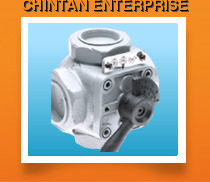
| MAIN CHARACTERISTICS : This type of valve is used in central heating system to ensure a hot return to the boiler and consequently achieve thermal operation at sufficiently high temperatures to prevent vapor condensation in the smokestack. Vapors, in combination with the products of combustion, can generate corrosive compounds that reduce the operating life of the boiler. MUT valves are supplied with manual control systems and can be easily motorized at any time using MUT M series and V Series type motors and/or commercially available motors. MUT valves consist of a cast- iron body and internal rotor. The rotation angle is approximately 90. Mixing is done by a circular segment rotor in models VDM and by a butterfly valve in models VM and VF. |
FUNCTIONAL CHARACTERISTICS : - Rated pressure PN 6 kg/cm
- Fluid Temperature 2110C
- Rotor travel 90C
|
MATERIALS : - Valve body cast-iron
- Rotor cast-iron
- Fastening screws steel
- Cover Aluminium
- Bush Aluminium
|
Versatile Sealing and Operation OptionsROTOR Mixing and Shunt Valves offer a selection of sealing materialsEPDM, NBR, and PTFEto suit varying media and temperature requirements. With quarter turn or rotary operation mechanisms, these valves provide dependable performance in both manual and automated systems, ensuring compatibility with electric and pneumatic actuators for diverse HVAC applications.
Robust Standards and CustomizationBuilt according to EN 1092 standards, the valve bodies are constructed from durable cast iron, ductile iron, or brass. Finishes include epoxy coating or painting in standard blue, black, or custom RAL shades. The valves fit a range of installation needs, with both flanged and threaded connections (DIN/ANSI) and port sizes from DN 25 up to DN 150 mm, suiting standard HVAC system criteria.
FAQs of ROTOR MIXING AND SHUNT VALVES:
Q: How are ROTOR Mixing and Shunt Valves installed for optimal performance?
A: ROTOR Mixing and Shunt Valves can be installed in either horizontal or vertical positions to suit the pipeline layout. It is important to align the valve correctly according to the flow direction indicated. Professional installation ensures reliable mixing and shunt functions in HVAC systems.
Q: What are the main benefits of using valves with EPDM, NBR, or PTFE seals?
A: EPDM, NBR, and PTFE seals offer excellent chemical and temperature resistance, making the valves suitable for water, hot water, and steam applications. These options enhance the valves durability and ensure leak-proof operation, contributing to lower maintenance requirements.
Q: When should I choose manual, electric, or pneumatic operation for these valves?
A: Manual operation is ideal for basic control and budget-conscious projects, while electric and pneumatic actuators are preferable for automated systems requiring frequent or remote operation. Selection depends on your systems level of automation and control complexity.
Q: Where can ROTOR Mixing and Shunt Valves be applied within HVAC systems?
A: These valves are specifically designed for mixing and shunt duties in HVAC setups, including chilled water circuits, heating loops, and steam distribution, ensuring precise temperature control across various industrial and commercial environments.
Q: What does leakage class IV (soft seated) mean for these valves?
A: Leakage class IV indicates a high integrity soft-seated design, allowing minimal leakage under operating conditions. This classification ensures excellent shut-off performance, minimizing wastage and ensuring system efficiency.
Q: How are these valves tested before delivery?
A: Each ROTOR Mixing and Shunt Valve undergoes rigorous inspection and 100% pressure testing. This process ensures all valves meet strict safety, sealing, and operational standards before reaching distributors, exporters, importers, and end users.






 Send Inquiry


 Send Inquiry
